


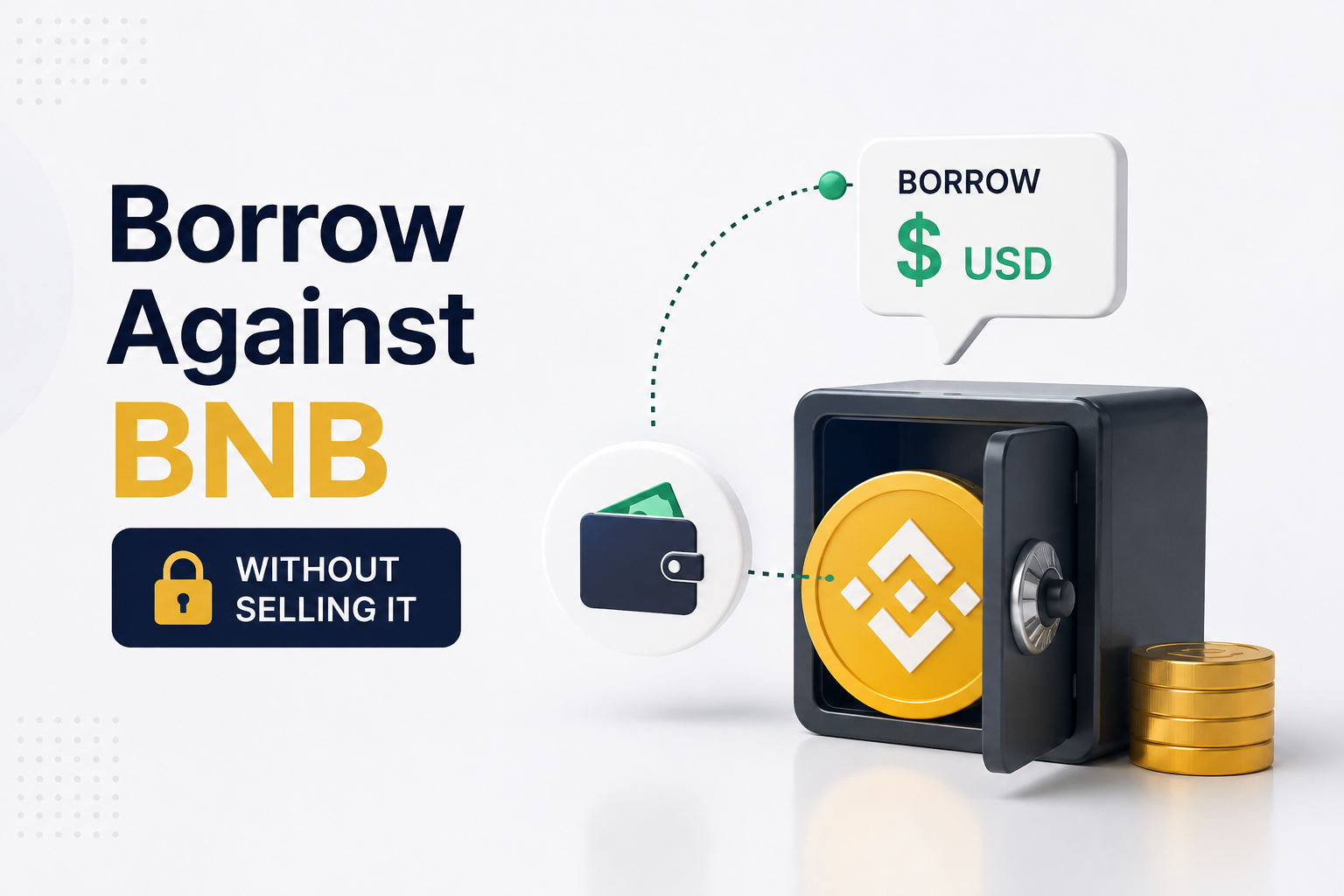
Yes, in principle. In 2026, BNB holders can use eligible BNB or BNB-related assets as collateral to borrow another asset without selling the BNB itself. The verified routes covered here are Binance Loans, Venus Protocol, and Lista DAO. Each has different custody, eligibility, interest, collateral, and liquidation rules, so “borrow without selling” does not mean “borrow without risk.”
What is the short answer?
You may be able to borrow against BNB through a centralized lending product or a BNB Chain DeFi protocol, provided BNB is supported as collateral in the relevant product at the time you apply.
- Binance Loans: Binance’s official materials list BNB among supported collateral assets, but the exact assets, quotas, rates, and eligibility vary by product and can change.
- Venus Protocol: Users supply assets from a Web3 wallet and may borrow other supported assets within the account’s borrowing limit.
- Lista DAO: Its official documentation describes borrowing USD1 or BNB against BNB or slisBNB through Smart Lending, subject to the product’s live conditions.
How does borrowing against BNB work?
You deposit or pledge BNB as collateral, receive a loan in another asset, and must keep enough collateral value relative to the debt until repayment.
The basic process is easier to understand as a four-step path:
| Step | What happens |
|---|---|
| 1. Supply collateral | You place eligible BNB or a supported BNB-related asset into the chosen lending product. |
| 2. Borrow | The platform calculates the amount available under its collateral and risk limits, then lends a supported asset. |
| 3. Monitor | Interest, fees, market prices, and the collateral ratio affect the position while the debt remains open. |
| 4. Repay and withdraw | After the debt and applicable charges are repaid, the collateral can be released under the product’s rules. |
Keeping BNB instead of selling it preserves exposure to BNB’s price. It also creates a liability. If BNB falls in value, the collateral may no longer provide enough coverage, even if the amount of BNB has not changed.
What does Binance Loans offer for BNB holders?
Binance’s official 2026 materials describe crypto-backed loans that can use BNB as collateral, but the live product page remains the authority for current support and terms.
Binance lists four loan categories: Lite Loan, Flexible Rate Loan, Fixed Rate Loan, and VIP Loan. Its official guide identifies BNB among supported assets, while also stating that supported collateral and borrowable assets vary by product, available token amount, and quota.
- Lite Loan: A fixed 30-day product with a fixed one-time service fee, no additional interest during the loan term, a capped loan amount, and product-specific overdue rules.
- Flexible Rate Loan: An open-term product in which interest accrues every minute at a floating rate. Binance says users can borrow and repay within the product rules.
- Fixed Rate Loan: A fixed-rate product with selectable terms shown by Binance as 30 to 180 days. Interest is charged upfront, and overdue conditions apply.
- VIP Loan: A product for qualifying VIP users with different limits and features. It should not be treated as the standard retail option.
Binance uses loan-to-value, or LTV, thresholds. The initial LTV limits borrowing, the margin-call LTV triggers a warning or required action, and the liquidation LTV permits liquidation under the product terms. The exact thresholds are not universal and should be checked for the specific BNB loan before borrowing.
Can you borrow against BNB through Venus Protocol?
Venus uses a supply-first model: you supply supported collateral from a Web3 wallet and borrow other assets within the account’s borrowing limit.
Venus’s official guide says that:
- Users connect a supported wallet
- Select a market
- Supply an asset
- Then borrow another asset within the borrowing limit
The limit depends on the value of supplied assets and the risk parameters of the relevant pool. Venus also says that markets have supply caps, which can restrict deposits even when an asset is generally supported.
Venus’s official liquidation documentation explains that collateral factors and liquidation thresholds are used to identify under-collateralized positions. When a position becomes eligible, collateral can be seized to repay outstanding debt. The current BNB market parameters should be read directly in the Venus interface before any transaction; example values in technical documentation are not a guarantee of current BNB terms.
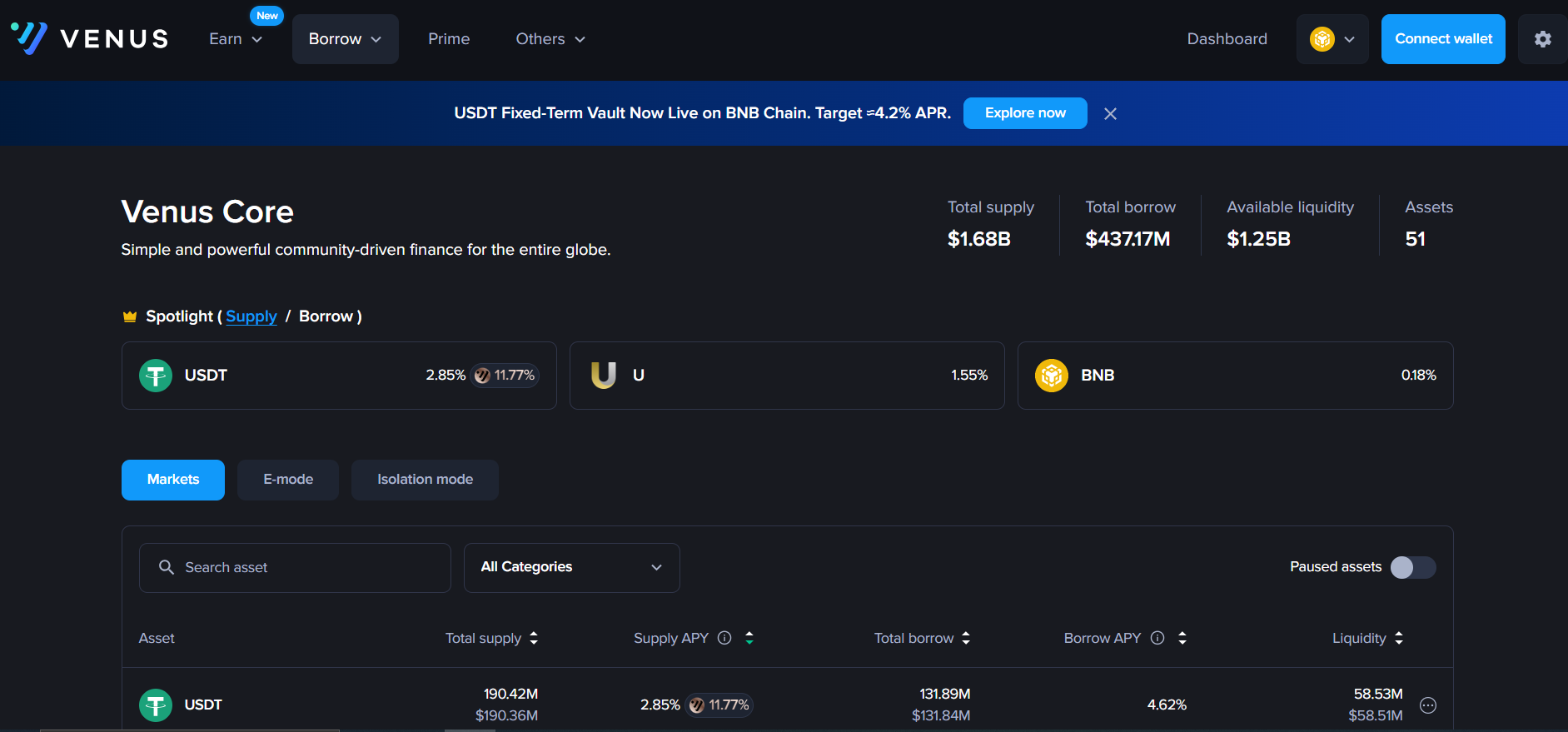
Because Venus is an on-chain protocol, the user also takes smart-contract, oracle, wallet-security, transaction-fee, and protocol-governance risks. A self-custody interface does not make a loan risk-free.
What is Lista DAO’s BNB borrowing route?
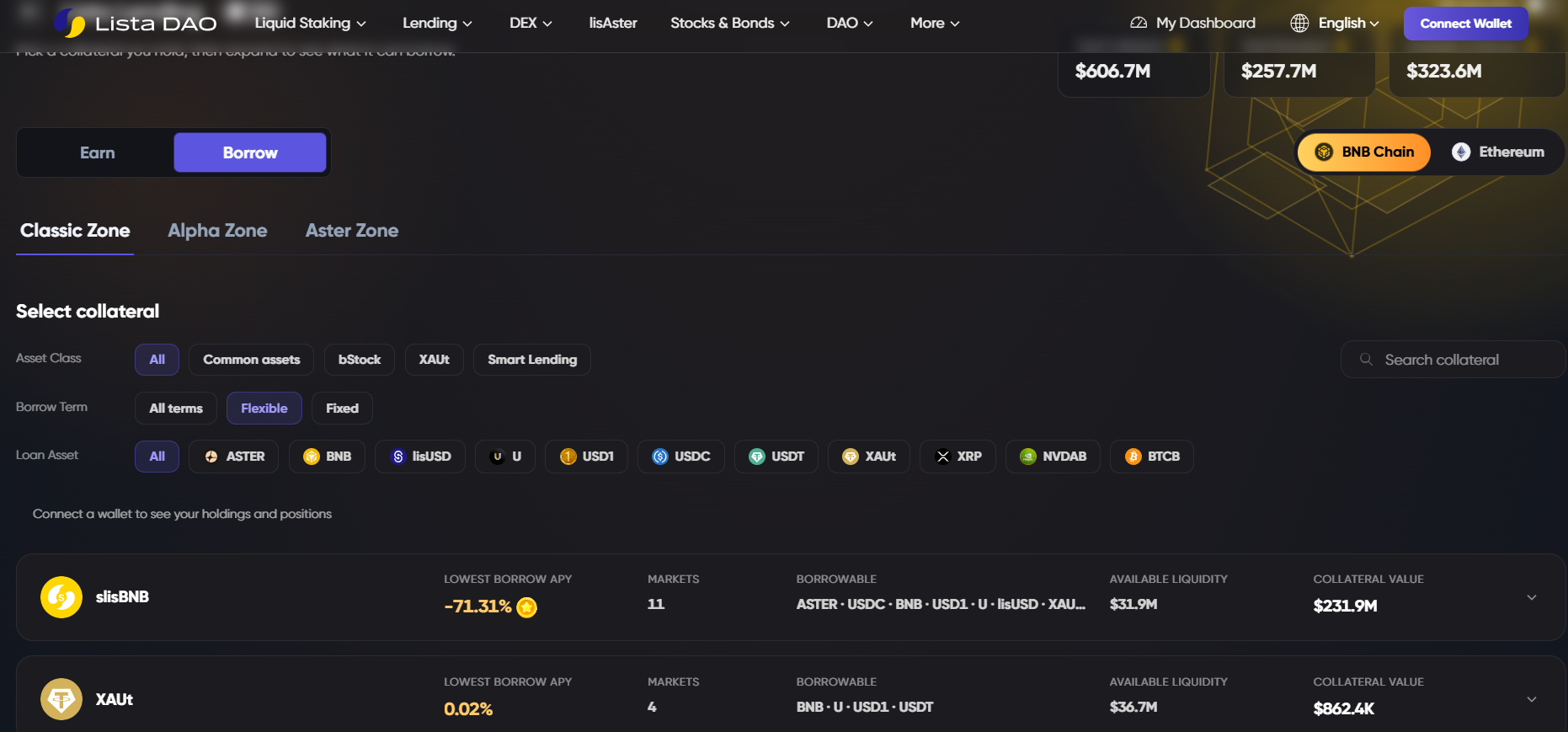
Lista DAO’s official documentation describes BNB and slisBNB borrowing routes, including borrowing USD1 or BNB against BNB/slisBNB deposited into Smart Lending.
Lista DAO describes itself as a BNB Chain lending protocol, liquid-staking solution for BNB, and collateralized-debt-position protocol. Its Smart Lending documentation says users who deposit BNB or slisBNB as liquid provision can borrow USD1 or BNB against it while earning trading fees from BNB/slisBNB activity on Smart Swap.
That mechanism is specific to Lista’s product design. It should not be generalized to every BNB lending market, and the live interface should be checked for approved assets, collateral ratios, fees, debt limits, and liquidation conditions.
Which borrowing route is different from the others?
Binance Loans is account-based and custodial, while Venus and Lista are on-chain protocols accessed through Web3 wallets. The exact choice depends on eligibility and risk tolerance, not just headline borrowing rates.
| Route | How collateral is handled | Borrowing model | Main verified caution |
|---|---|---|---|
| Binance Loans | Assets are held within Binance’s lending system under the selected product. | Lite, flexible-rate, fixed-rate, and VIP products. | Supported assets, rates, quotas, LTVs, and jurisdictional access vary by product. |
| Venus Protocol | Users supply supported assets from a Web3 wallet to an on-chain money market. | Borrow within the account’s collateral-based borrowing limit. | Positions can be liquidated when the account becomes under-collateralized; smart-contract and oracle risks apply. |
| Lista DAO | BNB or slisBNB can be used in documented BNB Chain lending and Smart Lending routes. | Borrow USD1 or BNB in supported Lista products. | Product-specific limits and risks apply; current terms must be checked in the live interface. |
What are the main risks of borrowing against BNB?
The central risk is forced loss of collateral if BNB’s value falls enough, but borrowing also adds interest, platform, technical, and legal risks.
- Liquidation risk: A fall in BNB’s value can raise the loan-to-value ratio or create a collateral shortfall.
- Interest and fee risk: Floating rates can change, and fixed products may charge fees or interest upfront.
- Debt remains: The loan must be repaid even if the borrowed asset loses value or the collateral is sold during liquidation.
- Protocol risk: DeFi lending depends on smart contracts, price oracles, governance, and blockchain operations.
- Custody and access risk: Centralized products introduce account, counterparty, withdrawal, and jurisdictional considerations.
- Asset risk: If the loan is denominated in a stablecoin or another token, that borrowed asset has its own liquidity and market risks.
A lower borrowing ratio generally leaves more room for adverse price movement than borrowing close to the maximum available limit, but no collateral ratio removes market or platform risk.
What should you verify before using a BNB-backed loan?
Verify the exact product page and transaction screen immediately before borrowing; general documentation cannot guarantee live terms.
- Whether BNB or the intended BNB-related asset is currently accepted as collateral.
- The borrowable asset, interest rate or service fee, term, repayment rules, and minimum or maximum amounts.
- The initial LTV, margin-call threshold, liquidation threshold, and any liquidation penalty or incentive.
- Whether the product is available in your jurisdiction and account type.
- Whether the collateral remains in custody of a centralized platform or is supplied to a smart contract.
- How you would repay if BNB falls sharply and whether you have a separate source of repayment funds.
Frequently Asked Questions (FAQs)
Q: Can I borrow USDT or a stablecoin against BNB?
A: Potentially, if the selected Binance, Venus, or Lista product supports BNB as collateral and the requested borrowed asset. The live product interface determines current availability.
Q: Do I still own my BNB after using it as collateral?
A: You generally retain economic exposure to the BNB, but the platform or smart contract controls the collateral under the loan terms. If the position becomes under-collateralized, some or all of it may be liquidated.
Q: Is borrowing against BNB safer than selling BNB?
A: It is not automatically safer. Borrowing avoids an immediate sale but creates debt, interest or fees, and liquidation risk. Selling avoids debt but ends the position’s BNB exposure.
Q: Can BNB-backed loans be liquidated?
A: Yes. Binance explains that liquidation can occur when product-specific LTV conditions are reached, and Venus documents liquidation of under-collateralized positions. Lista’s current product rules should be checked before use.
Q: Are the interest rates and LTV limits fixed for all users?
A: No. They can vary by product, asset, market, account type, quota, governance parameter, and time. Do not rely on an old screenshot or a rate quoted by a third party.
Disclaimer: This content is for informational purposes only and does not constitute financial or legal advice. Crypto assets are highly volatile and involve significant risk. Always do your own research and consider your risk tolerance before making any financial decisions.