


Binance Pool to Shut Down on November 10, 2026
Tuesday, October 13, 2026 at 12:16 PM

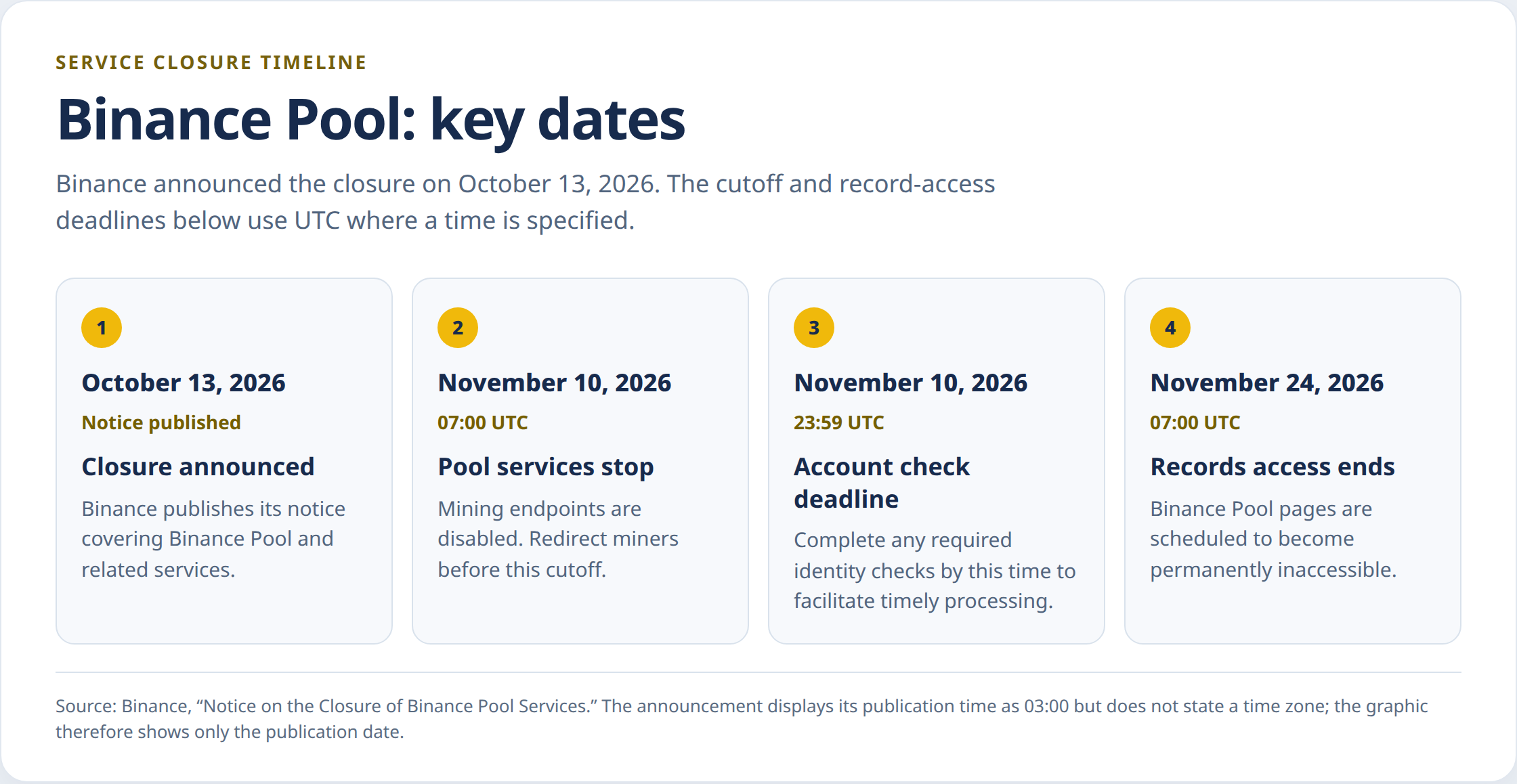
October 13, 2026 — Binance says it will discontinue Binance Pool and related services at 07:00 UTC on November 10, 2026. Before that deadline, miners need to disconnect from Binance Pool and reconfigure their machines to use another pool. Mining shares sent to Binance Pool after the cutoff will not be accepted or credited. [Binance’s notice]
What Binance is discontinuing
The notice covers Binance Pool itself, along with Pool Savings, Cloud Mining and Transaction Accelerator. Binance also lists related features that include Telegram hashrate alerts, email notifications and mining pool API services. Binance says it expects Binance Pool to operate under normal conditions until the relevant cutoff times in the notice.
At 07:00 UTC on November 10, Binance will start disconnecting mining connections and disable its mining Stratum URLs and endpoints. Hashrate submissions and mining shares after that time will no longer be accepted, processed or credited. Binance says eligible shares submitted before the cutoff will be included in the final reward calculation under the applicable pool rules.
How to move hashrate from Binance Pool
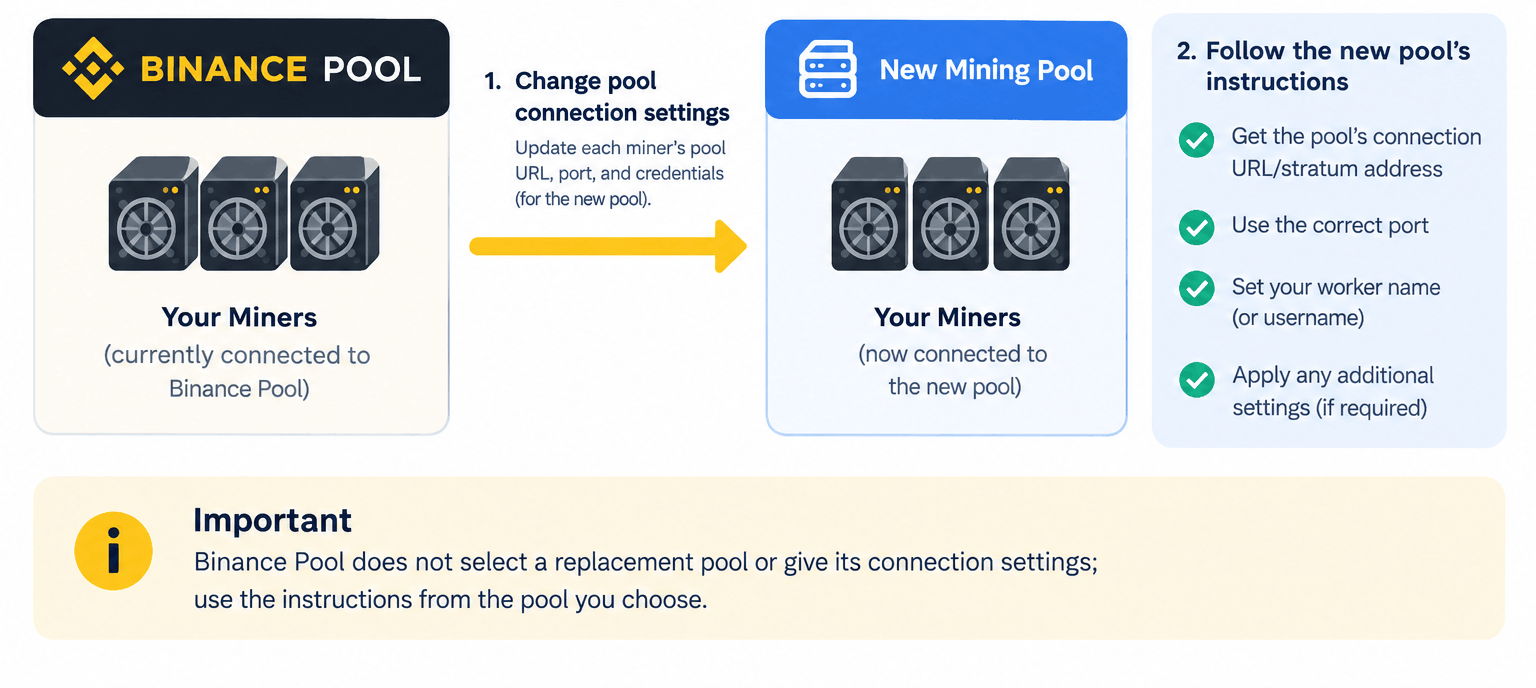
Hashrate is the computing work a miner contributes to a mining pool. Moving it means changing each miner’s pool connection so it sends work to a different provider. Binance’s notice does not select a replacement pool or give its connection settings; use the instructions from the pool you choose.
- Choose a compatible destination. Check that the new pool supports your mining equipment and the coin or mining algorithm you use.
- Get the new connection details. Follow the destination pool’s setup guide for its Stratum address and port, plus any worker name, account or password fields it requires.
- Update every miner before the deadline. Change the pool settings on each machine, including any backup or failover pool entries that still point to Binance.
- Test the connection. Before November 10 at 07:00 UTC, confirm the machines connect to the new pool and that it is receiving shares. Do not wait until the cutoff to troubleshoot.
- Save records and check separate products. Download reports or transaction history you may need. If you have an active Pool Savings position, Binance says to unsubscribe or redeem it before the service ends.
Binance also asks users to make sure their accounts can receive any eligible remaining rewards, refunds or settlements and to complete any required identity-verification steps by November 10, 2026, at 23:59 UTC, to help timely processing.
What happens to rewards and records?
Binance says eligible outstanding rewards, balances, refunds or settlements will be processed after the service cutoff where applicable. Processing remains subject to product rules, account status, risk controls, compliance checks and applicable law. The announcement does not promise that every account will receive a payment; eligibility is determined under the Mining Pool Product Terms.
Binance Pool pages are scheduled to remain available for viewing historical data, account records and payout status, where available, until November 24, 2026, at 07:00 UTC. After that, Binance says the pages will become permanently inaccessible. The company recommends saving relevant records where needed.
Analysis: the key deadline is the UTC cutoff
The practical risk for miners is leaving a machine configured to submit work to Binance after its endpoints are disabled. The announcement says that post-cutoff shares will not be credited. So the useful checkpoint is not simply the calendar date: miners need the replacement pool working before 07:00 UTC on November 10. A local clock may show a different date or hour.
The extra two-week record-viewing period is separate from mining service availability. It does not extend the time for submitting shares to Binance Pool. Users who rely on Binance’s alerts or APIs may also need to arrange replacement monitoring, because those related services are included in the discontinuation notice.
FAQs
What happens to Binance Pool after November 10, 2026?
At 07:00 UTC, Binance says its Pool-related services will stop. Mining connections and endpoints will be disabled, and later hashrate submissions and shares will not be accepted, processed or credited.
When should I move my hashrate from Binance Pool?
Reconfigure your miners to another pool before November 10, 2026, at 07:00 UTC. Binance says this is needed to avoid an interruption after the cutoff.
How do I move hashrate from Binance Pool?
Choose a compatible pool, use its setup instructions to update each miner’s pool address and worker details, and test that the new pool is receiving shares. Exact settings depend on the destination pool; Binance’s closure notice does not provide a replacement endpoint.
Will Binance credit mining shares submitted after the cutoff?
No. Binance says hashrate submissions and mining shares submitted after 07:00 UTC on November 10 will no longer be accepted, processed or credited. Eligible pre-cutoff shares are included in the final reward calculation under the applicable pool rules.
Can I still view Binance Pool records after November 10?
Yes, Binance says the Pool pages will remain accessible for historical data, account records and payout status, where available, until November 24, 2026, at 07:00 UTC. Save anything you need before access closes.
What happens to outstanding rewards and Pool Savings?
Eligible outstanding rewards, balances, refunds or settlements may be processed under the applicable product rules and account checks. Binance asks users with active Pool Savings positions to unsubscribe or redeem them before the service ends. Complete any required identity verification by November 10 at 23:59 UTC to facilitate timely processing.
Conclusion
Binance Pool’s announced cutoff is November 10, 2026, at 07:00 UTC. Miners should move each machine to a working alternative pool before that time, check Pool Savings and account requirements separately, and save needed records before Binance Pool pages close on November 24 at 07:00 UTC.
Read the full article on the original source
Read More